
The Song Of Cicada Wings

Background To The Novel
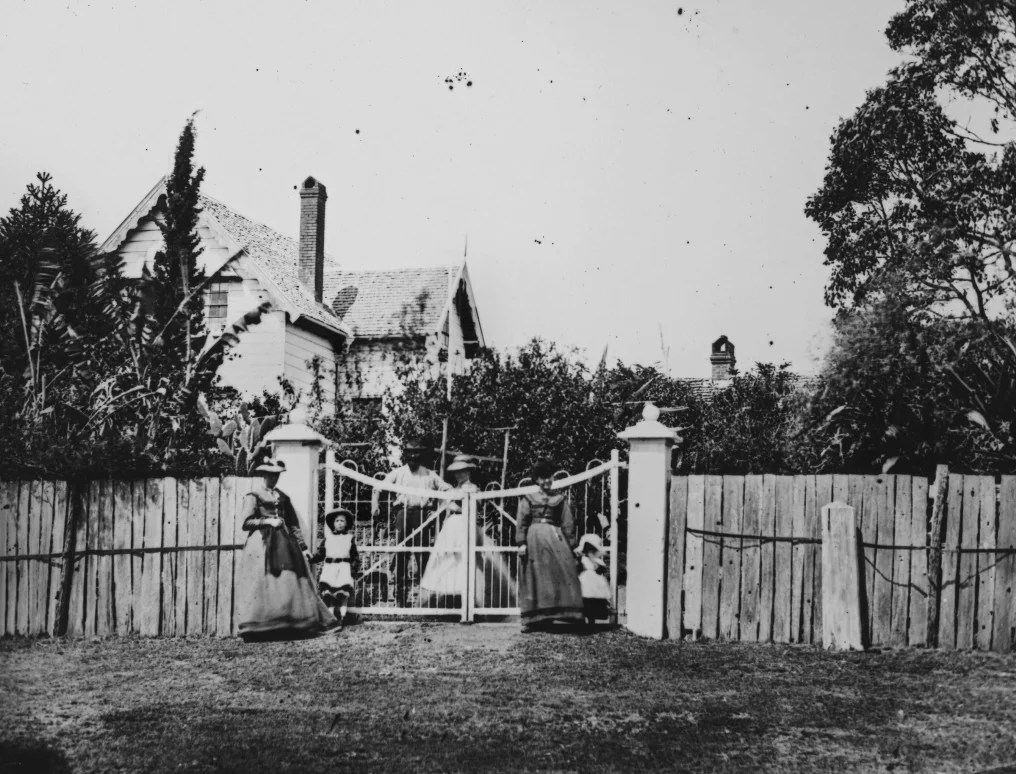
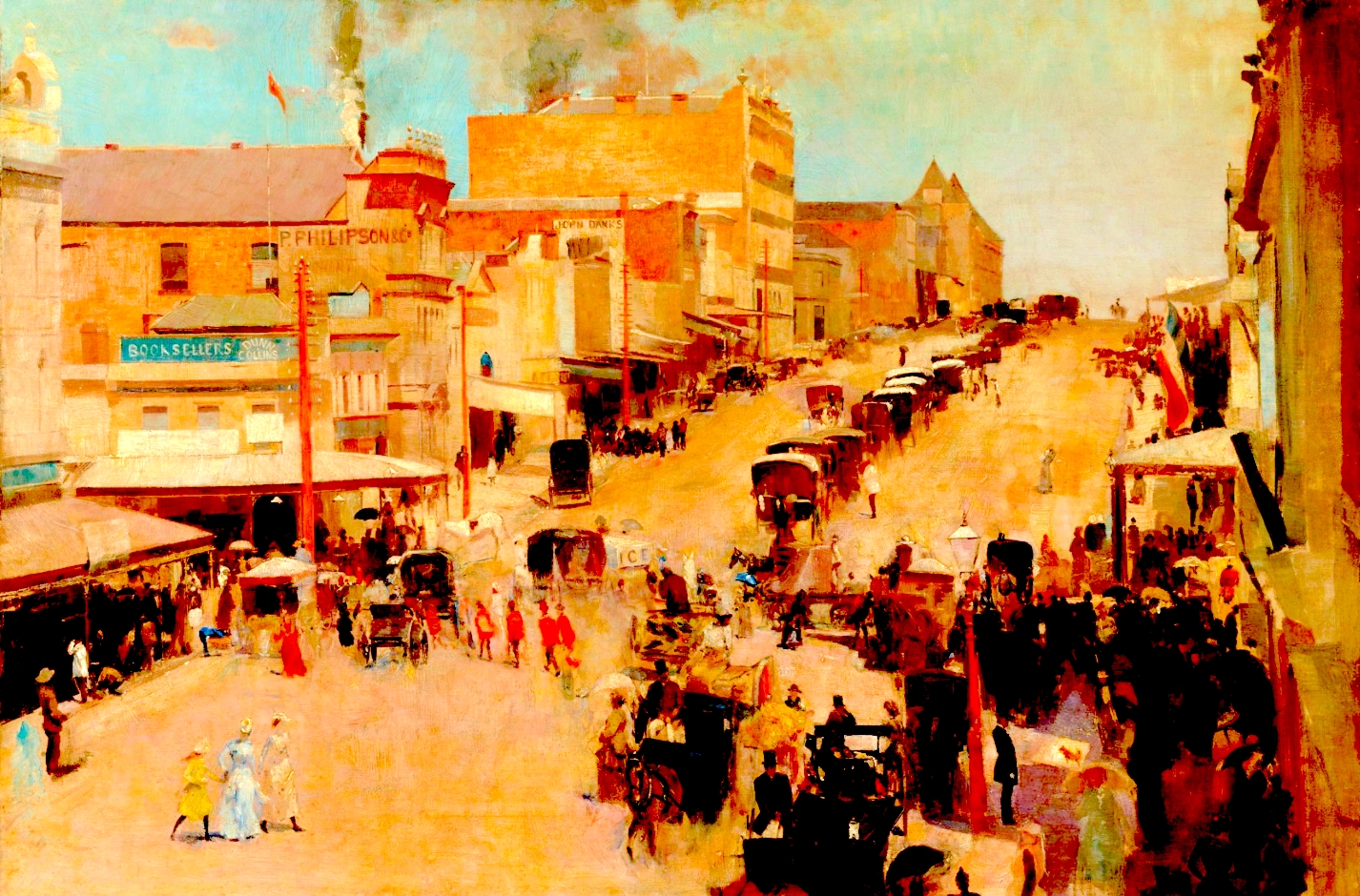
The song of Cicada Wings is my latest novel. It’s a work of biographical fiction and is the story of an opera singing family based in Brisbane Queensland at the turn of the century. I wanted to immerse the lives of each member of the family in the wider history of Australia whilst telling their individual stories. The Richardsons are actually my family and William Albert Richardson, alias Alberto Ricardi, was my great, great, grandfather.

Whilst sitting in my flat with my little dog, Lester, a terrible storm was raging outside. I was on my computer doing some research and came across my family history quite by accident. I think I was looking up my grandmother and found her name on a website by a man called Rex Sinnott. Apparently his great, great uncle had married Sarah Jane Richardson, who was the sister of William Richardson, the father of my great ,great, grandfather William Albert Richardson. Ver y complicated but there you have it. Sarah Jane and her brother had come to Port Phillip Bay Melbourne, from Huddersfield Yorkshire England, with their father who was after work in the goldfields. Their father was a well known watchmaker by trade. Anyway while their story is a great one that’s going too far back.

My story has begun with the next generation of Richardsons. The all singing Richardsons. While Sarah Jane married the dashing Captain Sinnott thirty years her senior, her brother, William Albert Richardson married Mathilde Mackarethe, a pianist. Mathilde was Scottish and a Presbyterian, while William Albert Richardson, was Catholic. They had met through the great William Saurin Lyster who had brought an opera company from Boston New York To Melbourne Australia. William Saurin was Irish. Mathilde played piano in his company and her husband sang all the great roles for baritone. They had eight children. Four of them became well known opera singers.

Imagine my absolute euphoria on that stormy day. At last I had pieced together my family tree. At least on the Richardson side. I was most excited to trace my family back to Yorkshire. There it was. The history of Colonialism, of settlers, of Federation, of suffragettes and priests and education and segregation. So much to explore! There was my family right at the centre of it all. It is amazing to me how little Austalians know of their own history. I learned so much writing this book. We are so much more than dirt roads and convict toil. If you think this is just another tale of downtrodden convicts then think again. Australia has always embraced the arts. Yet we have been portrayed as uncultured too often. Probably due to our propensity for sports over everything else.

The Richardsons lived in Melbourne and Adelaide but finally settled in Queensland. They travelled to England and back too. New Zealand also plays a big part in this novel as William Albert sang there many times and Edith, the eldest daughter, married and lived there. My great grandfather was Harold, one of the middle children in this novel. His son, my grandfather, Cyril, moved to New Zealand to marry my grandmother, Moira Dallow. As they say, the rest is history. The photo above is the Richardson family in the 1880s in front of their house in Vulture Street Brisbane, Queensland.

Cicadas take years to rise up from the earth and sing their little hearts out. Yet when they do they certainly make up for lost time. They can drown out everything with their song. Just as those great Australian touring opera companies long ago.
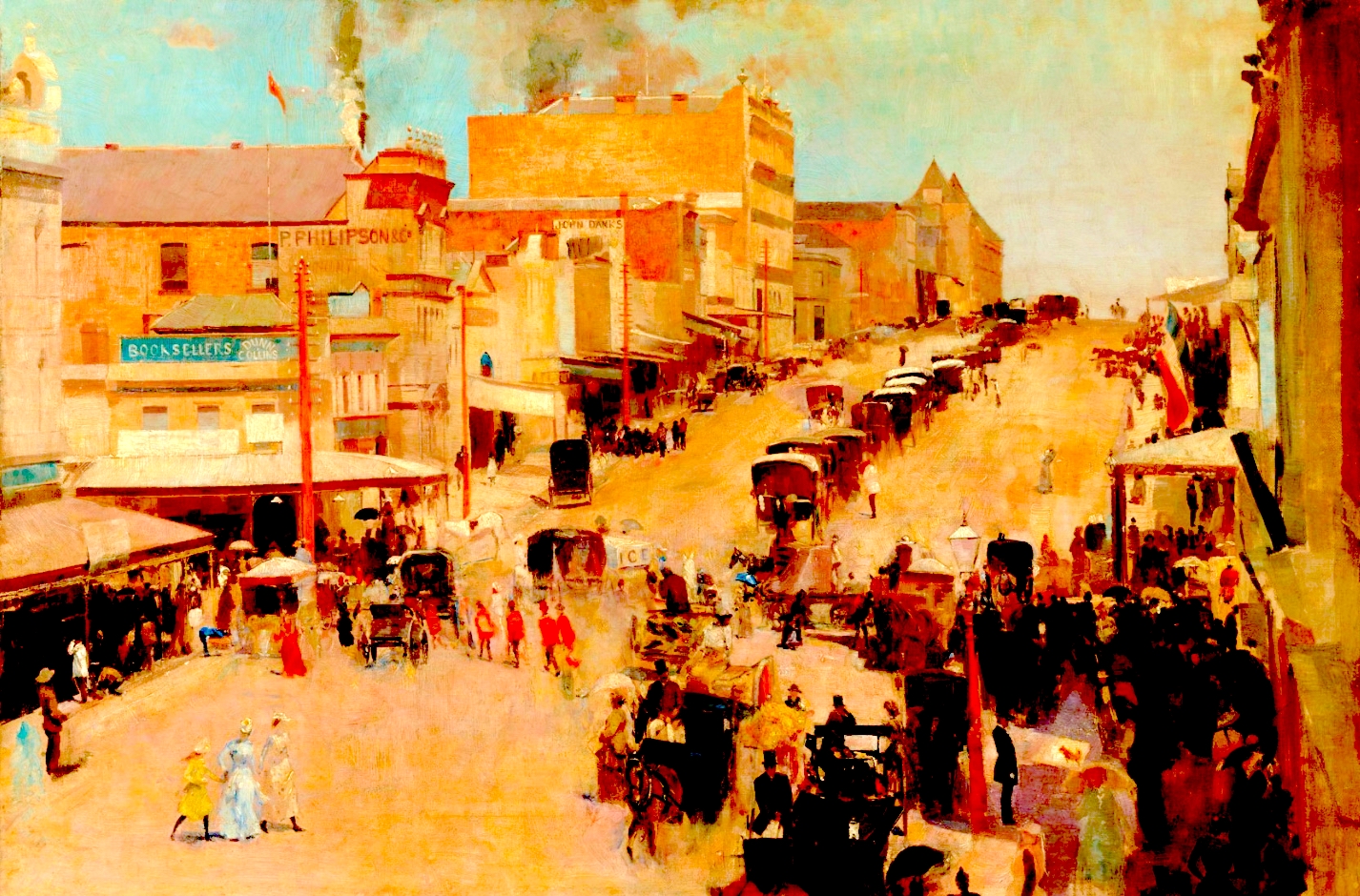
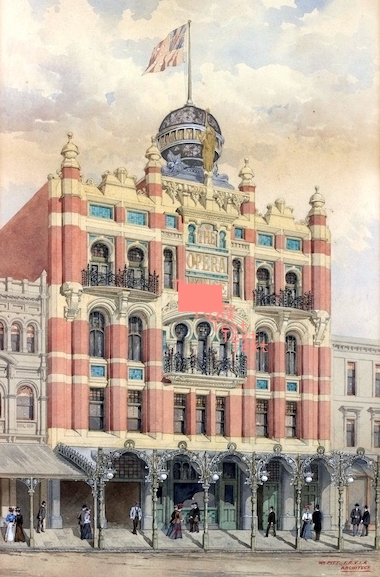
The Song Of Cicada Wings

An Incident At Foy And Gibsons

Excerpt from The Novel By Renee Dallow.

Edith and Florence were always in healthy competition. Edith was, however, very conscious, that she was the eldest and as such had a responsibility to watch over her sister. Florence was fond of teasing Edith for her serious demeanour and would always do the exact opposite of what Edith told her to do. Their brother, Vincent was very theatrical from an early age, and loved to pretend he was different characters. He loved to mimic his father while he was rehearsing. Charles had a wonderful ability to organise. This became apparent when he began lining up his brother and sisters at just five years of age. He would spin the top in their direction, aiming for in between the legs. If they didn’t duck soon enough, he would give them little tasks like running around in a circle three times, doing a handstand, or reciting a nursery rhyme backwards. This last one sent the children into fits of the giggles. Harold would be given the task of handing out prizes to the winner.

Florence and Vincent would put on little pantomimes together in which they would cast the others. The stories would be made up with invented characters and costumes from their parents wardrobe, which, invariably got dragged across the floor, as they hung around the children’s tiny frames. Mathilde and William, in fact, would have to pay to come and see their shows. Little Harold was put in charge of the tickets. The whole family seemed so happy and carefree that everyone in the neighbourhood couldn’t help but be a little jealous of them. Mostly the Catholics, as the Presbyterians and Anglian families found the Richardsons, to be much too rowdy, for their tastes.

William Albert had started giving private concerts, as he had done in England, years earlier. He was also conducting the choir at Saint Patricks Cathedral. Many of his wife’s students became part of this choir and it gave the couple an even higher standing in the community. So much so that William was able to raise quite a substantial amount for, The Ladies Benevolent Fund. This was something that even made him respectable with other denominations. Money was money, no matter what, one’s religion.

There was an incident at Foy and Gibsons which could very well have tipped the balance completely. Mathilde was taking too long in the millinery department and in girls clothing, looking for play dresses for Edith and Florence, when the boys, who had been told to stay put, had scarpered off. They’d taken themselves to the toy section and had practically destroyed a rocking horse in the display window, which, looked out onto the street. Vincent was eight at the time, but it was definitely Charles, in the lead. Grabbing two year old Harold, he made his way to the rocking horse with Vincent following along behind. Charlie had decided to give his baby brother a ride. Vincent, being the sensible one, tried to pull Harold off the horse, whilst at the same time, restraining Charles. This did not go well. Harold howled and clung to the horse’s main. Charles kicked Vincent, whereupon, Vincent smacked Charles and Harold fell off the rocking horse. All this in a display window which was the pride of the department store and extremely popular with passers by. This live display was certainly not what people expected and complaints were made. Meanwhile Mathilde, returning from the counter with her purchases, was shocked to find the boys had not stayed where they were told to, and immediately sent out a search party. Staff managers and sales people alike were sent out to find the little rebels. When finally they were discovered brawling in a heap, their whimpers now soft and low, they were hauled off to the rest room to calm down. The rocking horse was much the worse for wear too.

The Rocky Horror Show

The Theatre Royal Sydney

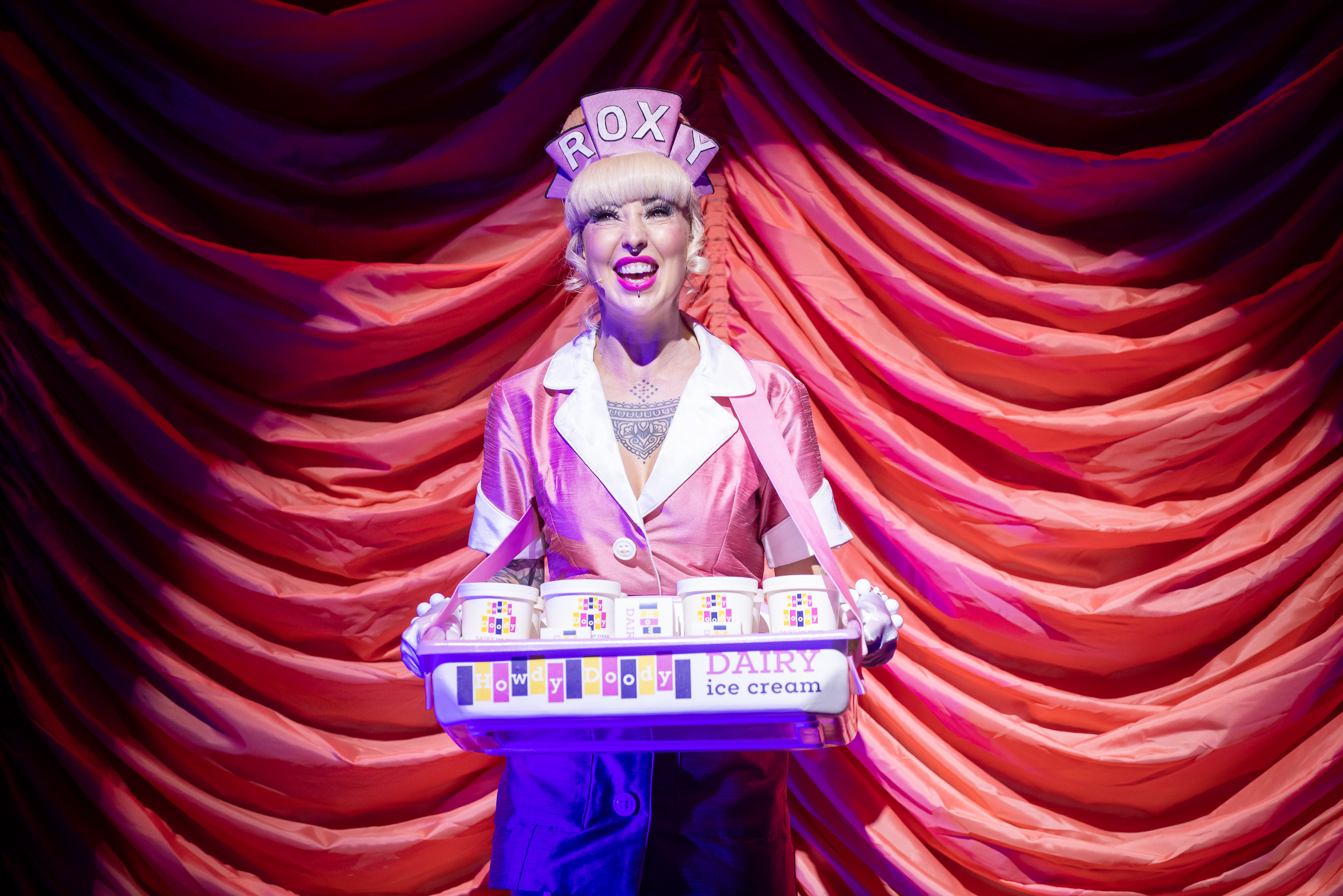
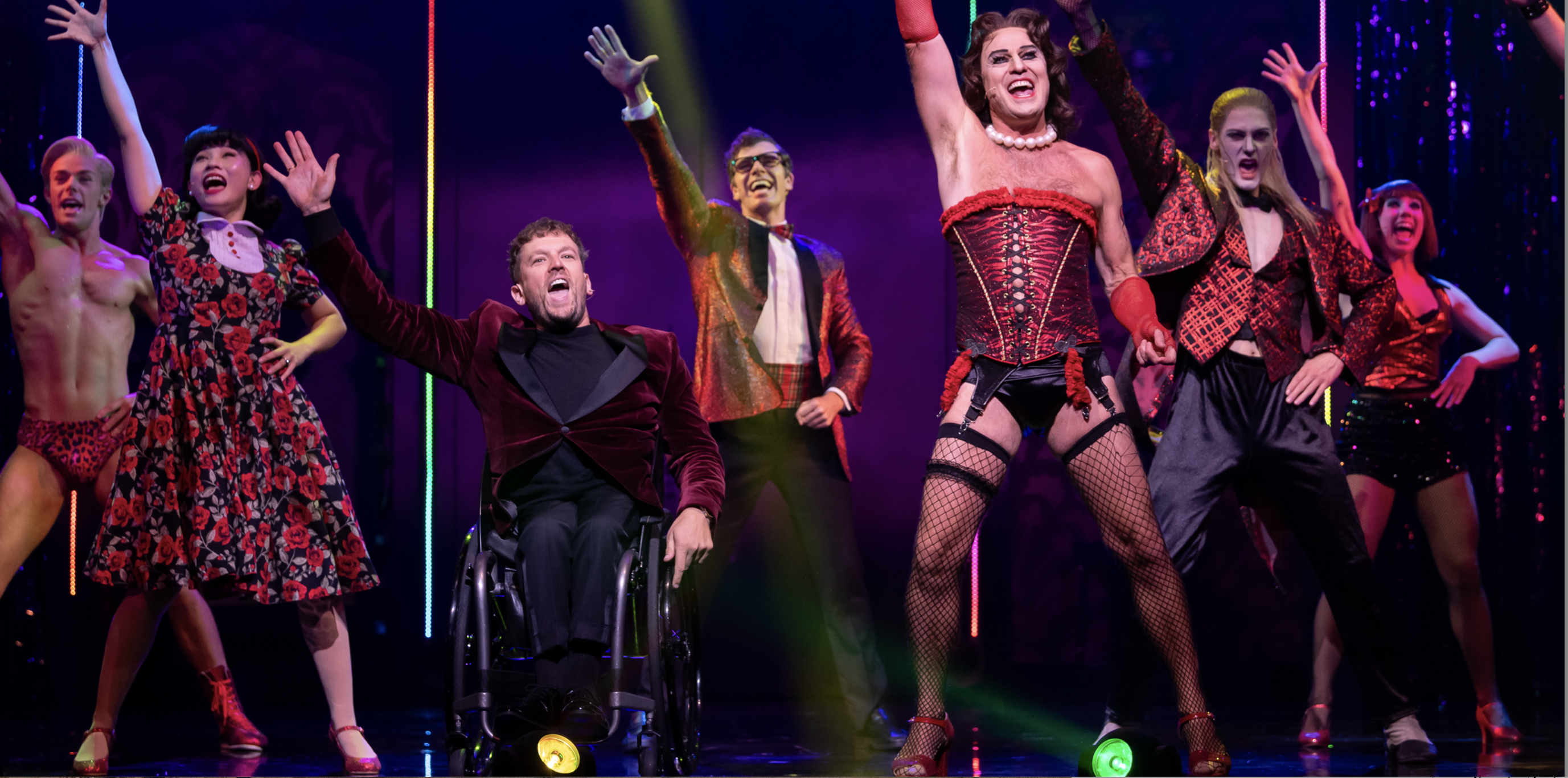
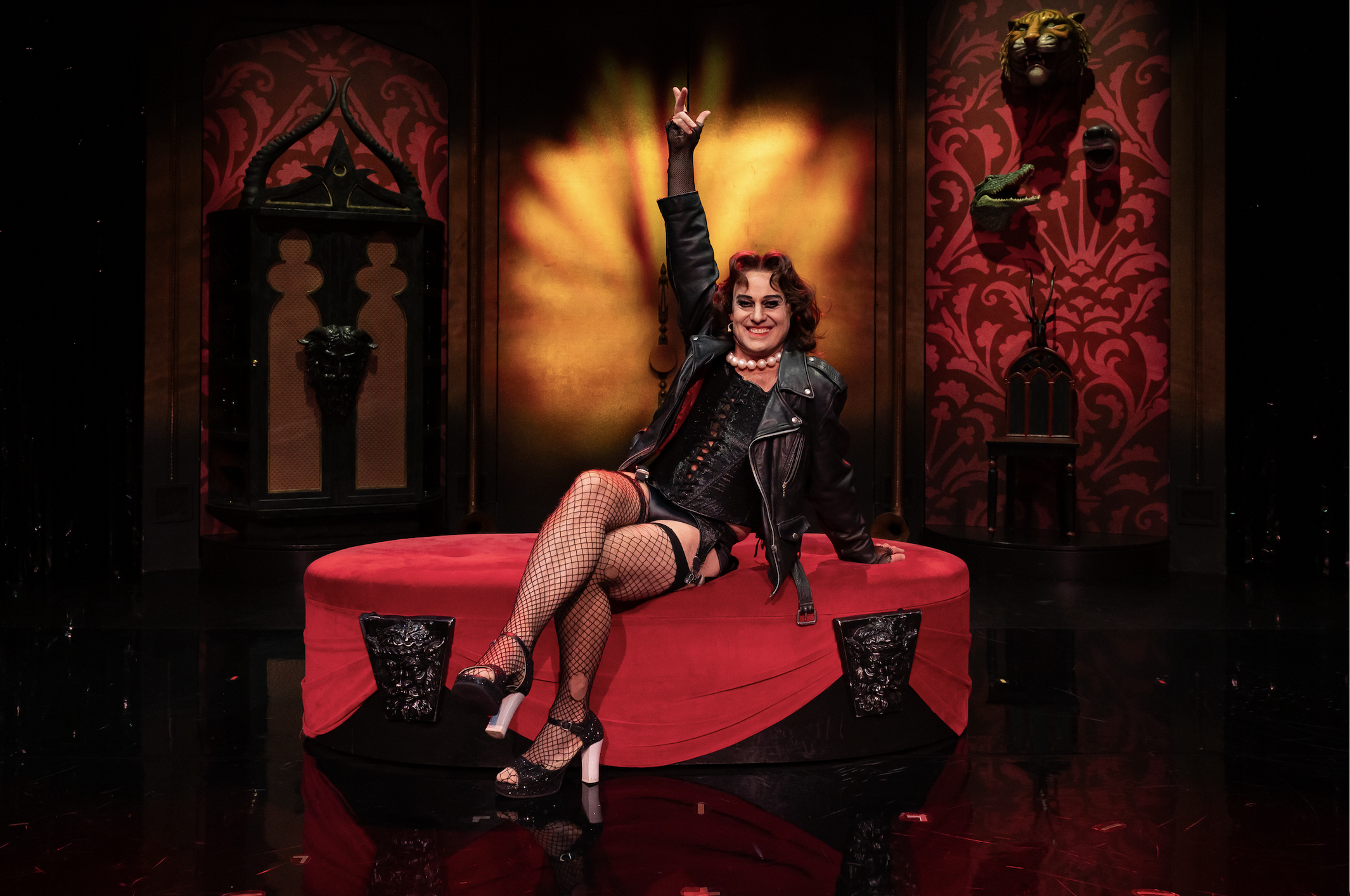
The Rocky Horror show is more than a show. It’s a special event every time it’s produced and performed anywhere in the world. A private party that anyone can attend. Written by Richard O’Brien, a celebrated actor, musician, television presenter and producer of musical theatre, way back in 1973, the show has certainly made an impact. Now it’s the shows 50th anniversary and the spectacular production at, The Theatre Royal Sydney, is indeed a decadent and delicious date with a deranged bunch of characters from another dimension. Jason Donovan’s Frank N Furter is a delight. His interpretation of the mad scientist is a mix of flippant upper crust house wife mixed with deluded despot. He is at once wickedly funny, fiercely tenacious and beautifully naughty. In fact the whole cast of this production is a dream. 

Dylan Alcott narrates the show with humour and pathos, add libbing with ease, and joking with the audience. His role is an integral part of the whole and his wheelchair moves are literally out of this world. Alcott proves, once again, that there are no limits to what you can achieve if you have the grit and determination to overcome whatever obstacles come your way. In the land of,Transexual Transylvania, that’s a must.  

Brad and Janet, played by Deirdre Khoo and Blake Bowden, add just the right amount of fertive frivolity to the madness and mayhem on stage.  Henry Rollo as Riff Raff, Stella Perry as Magenta and Darcey Eagle as Columbia, are all equally as astounding in their electrifying performances.  Ellis Dolan as Eddie also plays Dr Scott, who happens to be in a wheelchair, and has a penchant for stealing Dylan Alcott’s parking space. So the audience is told. The phantoms move in unison like an all consuming wave, watching and waiting, for things that go bump in the night. Frank N Furt’s creature, Rocky, Daniel Erbarcher is a perfectly sculpted and poised mass of muscle with all the right moves.

Director, Christopher Luscombe with his crew including, choreographer Nathan. M. Wright, lighting designer, Nick Richings, and costume designer Sue Blane have, with their combined creative vision and attention to detail, created a lusciious  two hours of escapism full of ……                      

‘Erotic nightmares beyond any measure

And sensual daydreams to treasure forever ’

So in the words of Frank N Furter …

Don’t Dream It. Be it.

……………………………………………

By Renee Dallow

Bourgeoise Bloomer Reviews And Banter.

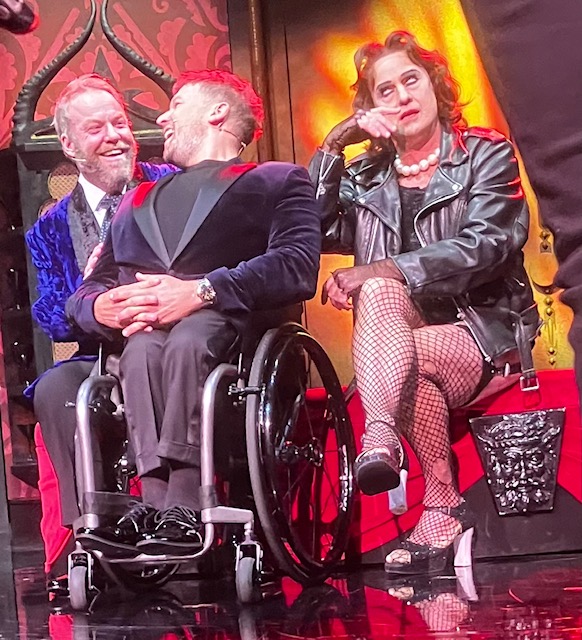
Dylan Alcott, Peter Helliar and Jason Donovan together for press photos.

Strangers On A Train

Genesian Theatre Sydney

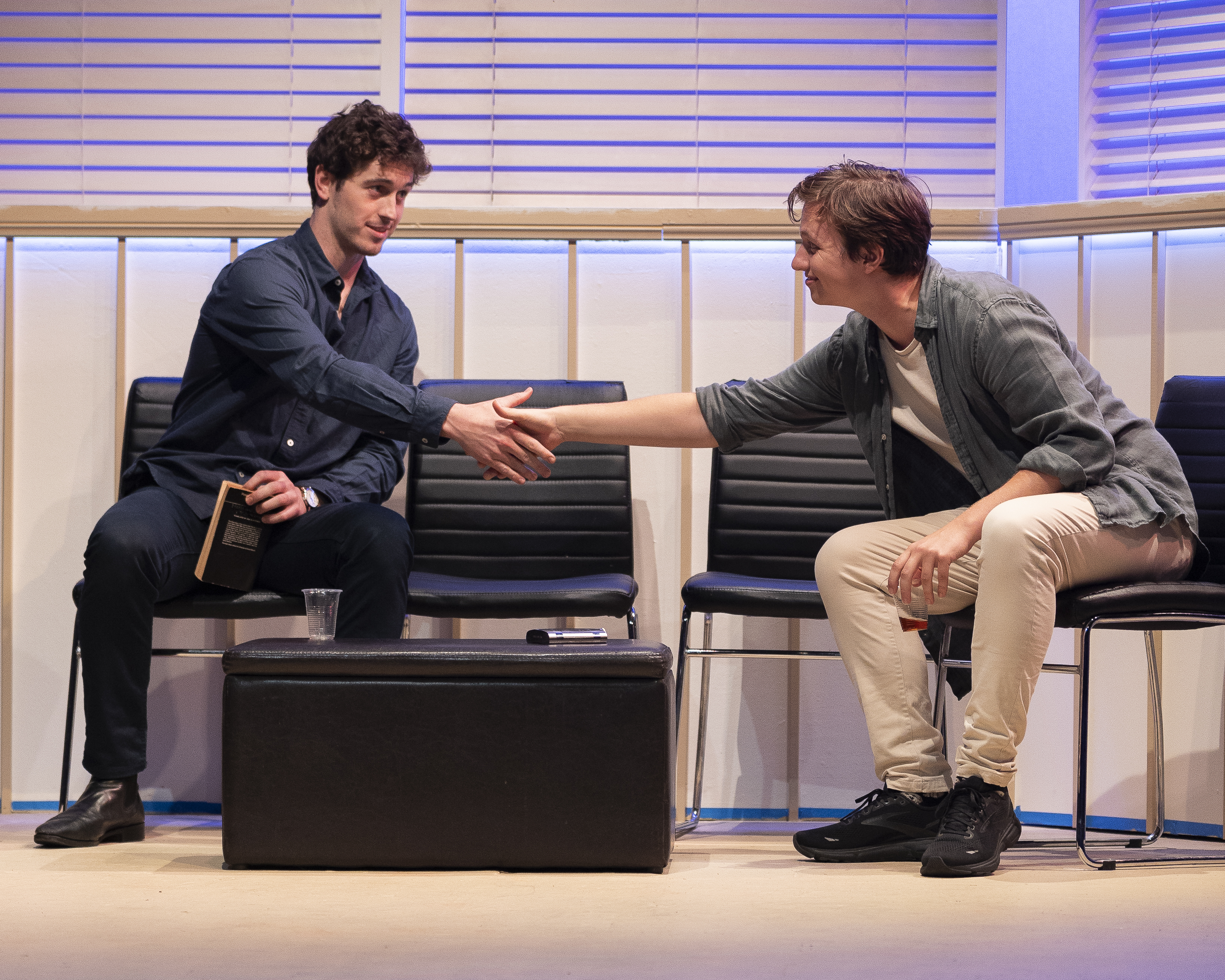
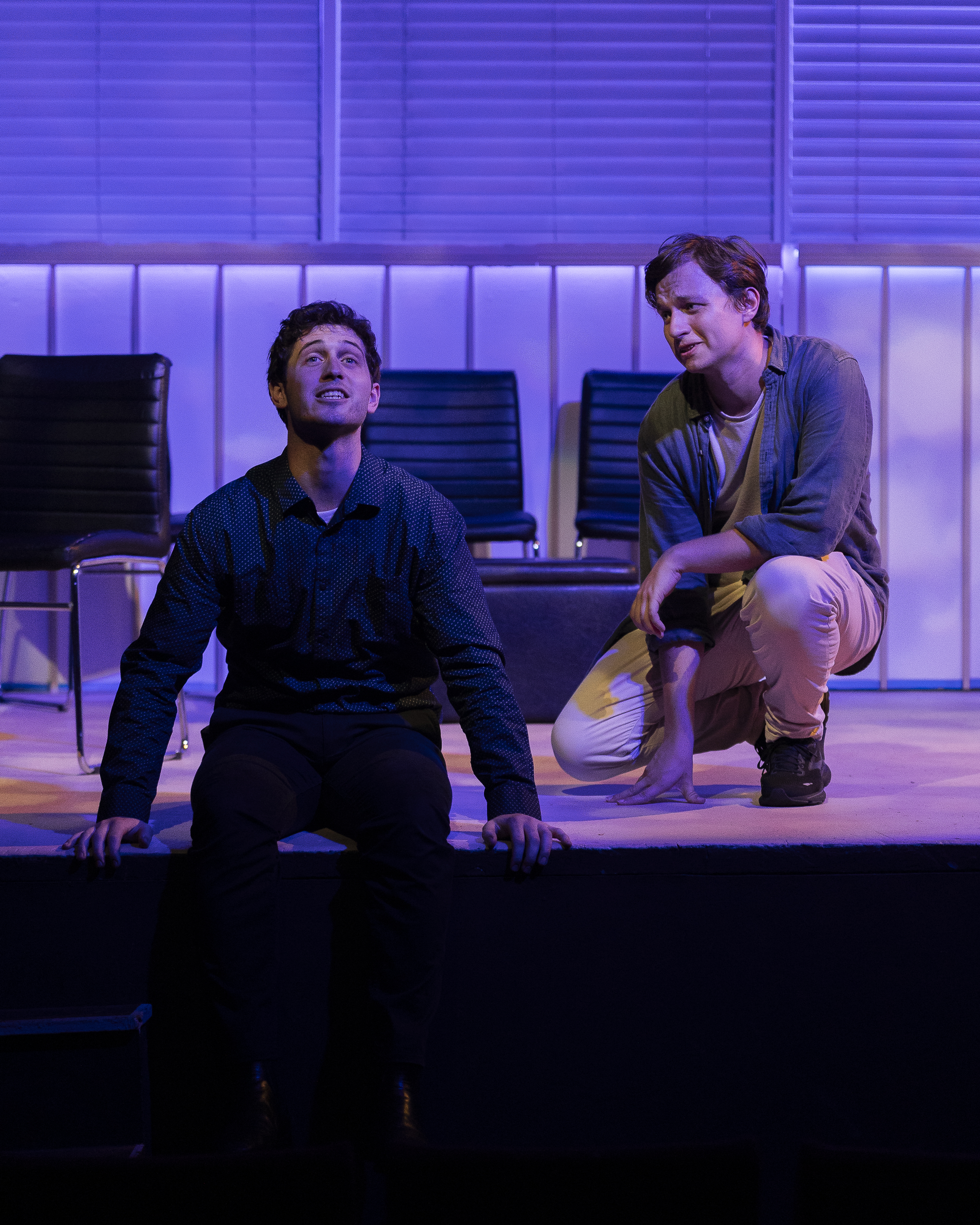
Directed by Mark G. Nagle, Strangers On A Train, is full of suspense.  A production that holds the audience spellbound with its compelling plot and obsessive characters. The play is at once an exploration of psychological manipulation and twisted family ties.  Two men meet on a train, one has an unhappy marriage and the other, an unhappy relationship with his father. The former is after a divorce and the latter is after murder. Guy Haines, the former, is a well dressed, poised young man, who also happens to be a much sought after architect. Charles Bruno, the latter, is a somewhat dishevelled character, prone to childish tantrums and drunken bouts of fantasy.. 

Reliant on his wealthy parents for money, Bruno was looking forward to his inheritance. Only problem is, his father, has cut him out of the will. He is planning for his father’s demise. Whilst on the train he suggests a simple solution to both their problems. That he kill Haines irritating wife and, Haines in turn, shoots Bruno’s father. No-one will connect them and it will be the perfect crime. Haines, gets off the train first, not realising that he has just entered an agreement with a psychopath who has every intention of carrying out the plan he considers signed, sealed and soon to be delivered.

This production, based on Patricia Highsmith’s novel, is set in Australia and in the present time. No 1950s film noir costumes but plenty of mood music. Sharp and discordant sounds too, are reminiscent, of Hitchcock’s 1951 film version. The lighting is reflective and heightens the intensity of the action on both a physical and psychological level. The set, though minimalist, is perfect for a play which rest so completely on the relationships between the characters.

The cast could not be faulted. Roy Wallace-Cant’s portrayal of, Psycho/Spoilt brat, Charles Bruno, is startlingly bone chilling. Hamish MacDonald gives a streamlined performance as Guy Haines and even resembles Farley Granger, who played the role in the film.

Supporting characters including Jane Wallace as Bruno’s mother, and Rachele Edson, as  Haine’s fiance/wife, are the perfect foils. Krishae Senthuran, Cris Bocchi and, most importantly, Christopher Brown as Detective Arthur Gerard, all add extra dimensions to what is a very well paced and beautifully directed journey into the recesses of the mind and it’s ability to control the thoughts and deeds of others.

What really stood out overall, in this production besides the direction and performances, were the exceptional lighting and sound effects. Michael Schell, deserves special mention, for attention to lighting and sound design.

By Renee Dallow

Bourgeoise Bloomer Reviews And Banter